projects / two brands, one back office
Navy Blue Yachting & Blue Cave Tours.
Two Croatian Adriatic tour brands — the higher-end speedboat brand and a Blue Cave-focused brand — sharing one operational dashboard. Same operator. Same crew. Same fleet. Two front doors for guests, one back office for the team.
The brief.
One operator out of Split runs two Adriatic tour brands: a higher-end speedboat brand positioned around hidden-gem itineraries across Hvar, Vis, and Blue Lagoon — and a focused brand built around the Blue Cave 5 Island Tour, the most-booked day trip out of Split.
Different audiences, different booking rhythms — but the same crew rotating across the same boats, drawing from the same daily schedule.
Two separate websites kept the brands distinct for guests. One shared admin kept the operation sane for the people running it.
The websites.
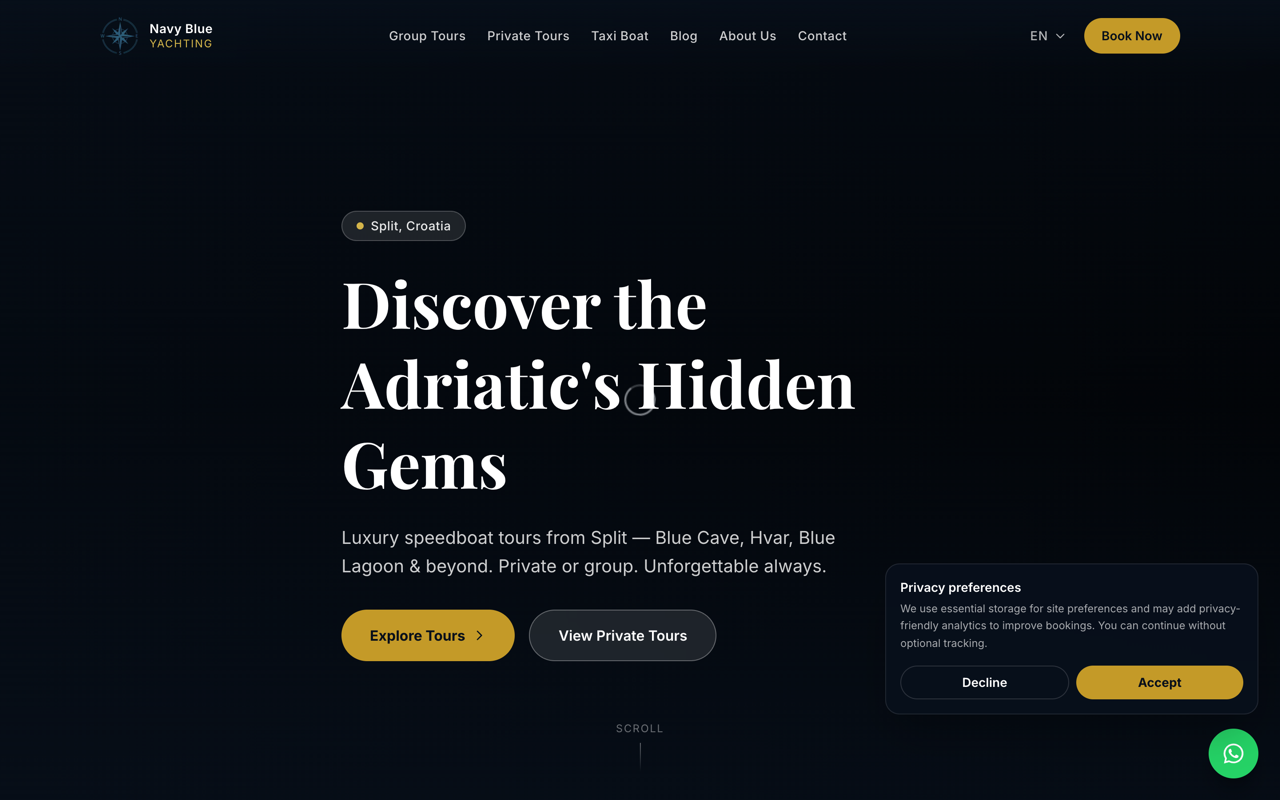
navyblueyachting.com is the higher-end positioning — dark, gold-accented, multi-tour catalog covering group tours, private charters, and taxi boat transfers. Built for guests planning a curated Adriatic day on the water before they arrive in Split.
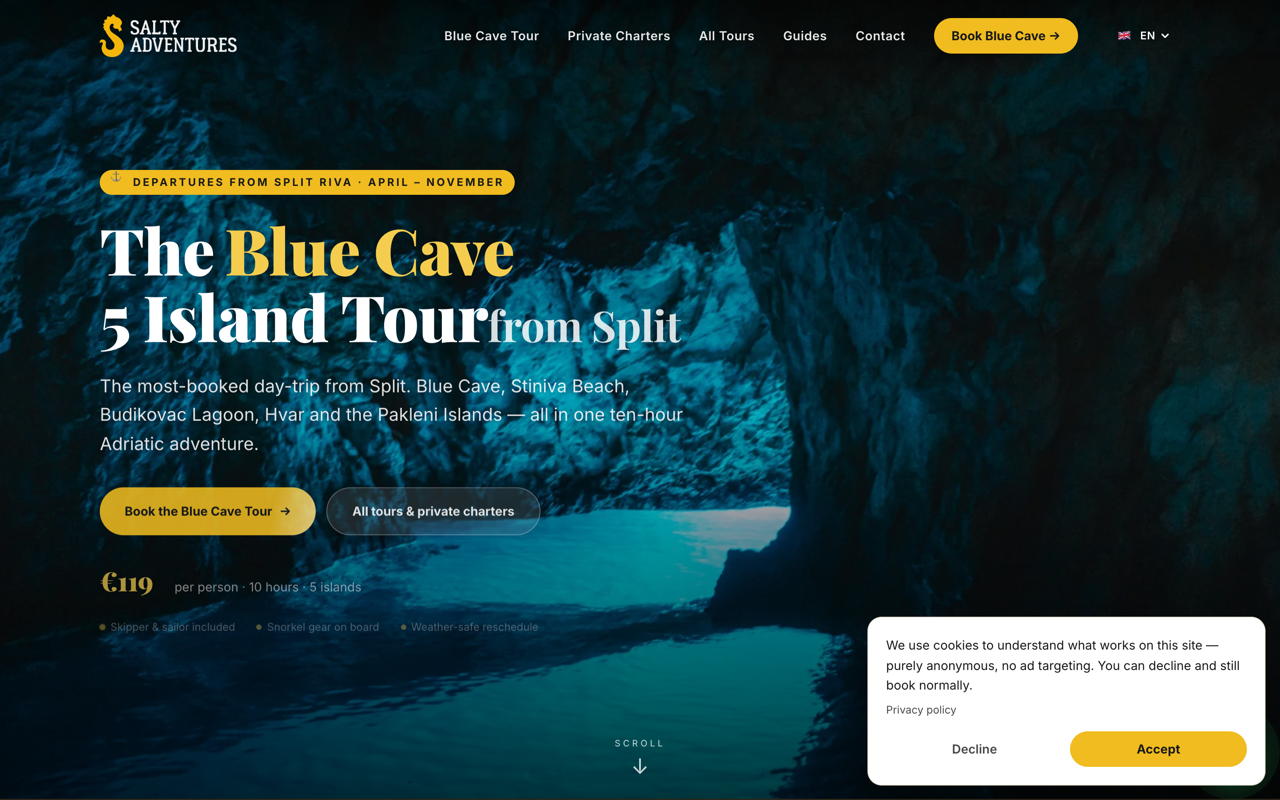
blue-cave-tours.com is the focused-product play — yellow, high-contrast, one hero tour front and centre. Built for travellers searching "Blue Cave Tour Split" while already on holiday, with departure points, daily availability, and a fast booking flow. Different conversion architecture, same operational quality bar.
The shared admin.
Behind both sites runs a single operational dashboard. Every booking from either brand lands in the same place, against the same calendar, drawing from the same crew and resource pool.
Four operational primitives the dashboard handles:
- Calendar — unified availability across both brands. A boat booked for a Navy Blue private charter automatically removes that boat's seats from Blue Cave tour capacity for the same day.
- Reservations list — every booking from both sites in one queue, with brand source, status, payment, and guest details. No tab-switching between platforms.
- Crew management — skipper and crew assignments across both brands, rotation, day-off tracking, and contact details. The team is shared; the schedule has to reflect that.
- Resource management — boats, equipment, and add-ons as a shared pool. Each resource knows which products can use it, on what days, with what limits.
Why this matters.
Running two related tourism products usually devolves into two of everything: two spreadsheets, two calendars, two channels for crew assignments, two systems double-booking the same boat on the same summer Tuesday.
The shared admin removes the duplication without forcing the brands to look or feel related from a guest's perspective. The higher-end visitor sees a polished hidden-gems brand. The Blue-Cave-searching visitor sees a focused single-product booking page. The operator sees one dashboard that doesn't lie about capacity.
Two front doors, one back office. The boats are shared.
Today's dad note: built a system that prevents the same boat from being booked twice on the same day. this is not glamorous. it is the difference between a season and a refund spreadsheet.
Sound familiar?
If you run more than one customer-facing brand off the same crew, fleet, or inventory — and your tools don't know that — that's the work. Multiple front-doors, one operating system underneath.
scope / built