projects / case study
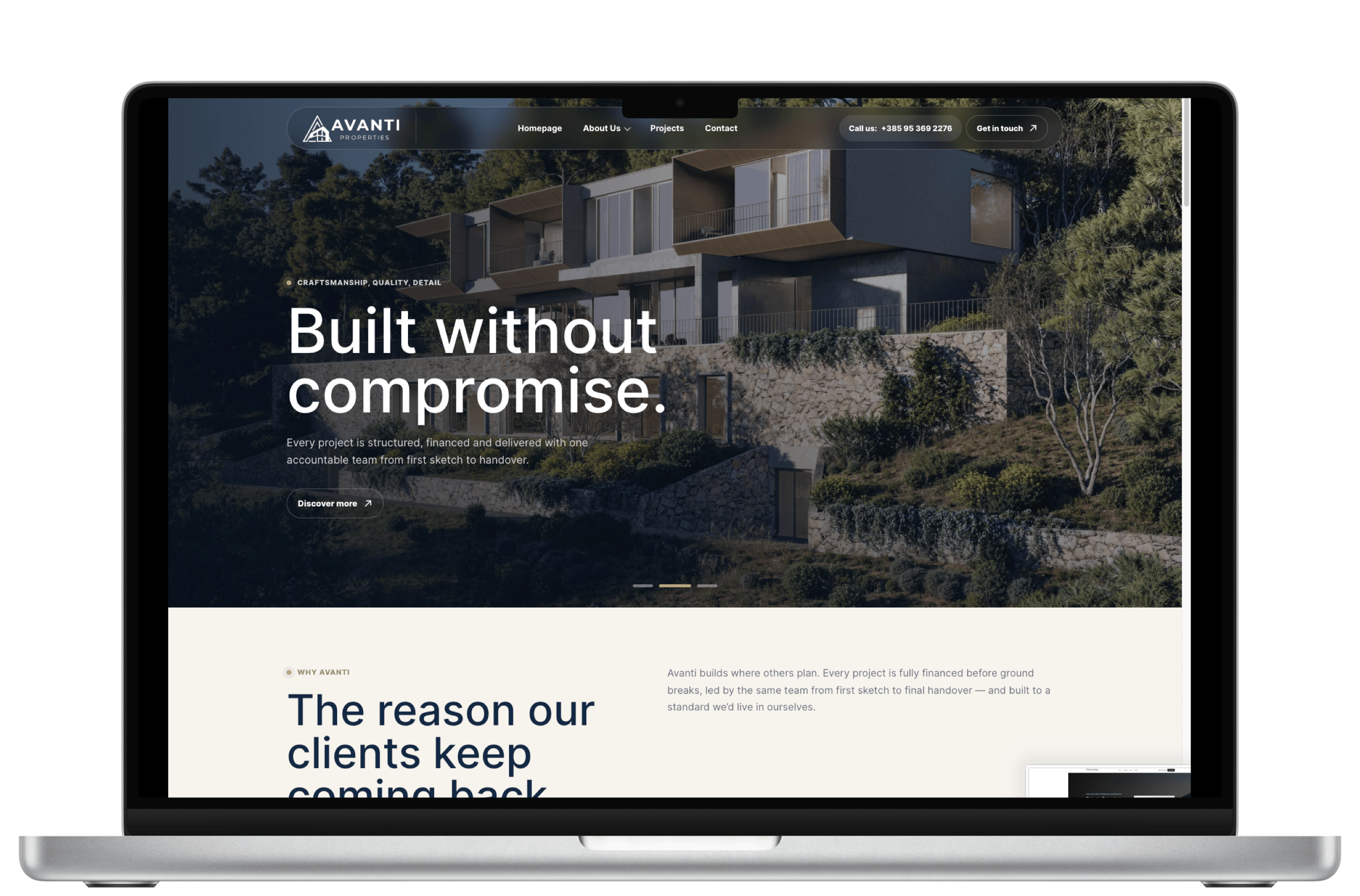
Avanti Properties.
Building the operational infrastructure behind a Dalmatian real estate development platform — from scattered spreadsheets to a structured system that scales with the portfolio.
What Avanti is.
Avanti Properties is not a real estate agency. It's a development platform — a company that acquires land, structures projects into dedicated LLCs, and brings them to market through three channels: equity partnerships, fixed-return lending, and development management for landowners.
When I came in, the model was solid. The operational layer behind it wasn't. 38,000 m² of land holdings, 14 projects at various stages, and no single system that could hold all of it clearly.
The operational problem.
Real estate development has a specific problem: each project has a long lifecycle — from land acquisition and permitting through construction and delivery. Across 14 projects at different phases, keeping track of what's where, what's next, and who needs to know what is genuinely complex.
On top of that, the investor communication model requires transparency. People putting money into early-stage development want structure. They want to know the system works before the building does.
The existing tools weren't built for this. Important information lived in email threads. Project phases weren't clearly documented. The gap between "what the investor sees" and "what's actually happening" was wider than it needed to be.
What I built.
We designed and implemented a project management system structured around Avanti's specific development lifecycle: land acquisition → permitting → pre-sales → construction → delivery. Each phase with clear documentation, exit criteria, and stakeholder visibility.
Investor reporting templates were standardised. Project status became a document, not a meeting. The portfolio could be reviewed at a glance rather than assembled from multiple sources.
Process documentation was written so that the system would survive personnel changes — not as bureaucracy, but as a foundation the company could grow on.
The goal was a system that looks as solid as the buildings. One of those is still easier to check.
Today's dad note: 38,000 m² of dalmatian land. zero built-in undo button. sustained by spreadsheets, optimism, and one very dedicated changelog.
What changed.
Weekly status meetings dropped by more than half — project state was visible in the system, not locked inside someone's head or email thread. New projects entered the operating structure within days of acquisition instead of weeks.
Investor reporting went from ad-hoc updates to structured, templated communications that went out on schedule. The portfolio — 14 projects across multiple development phases — was visible at a glance for the first time.
The most important shift was confidence. Internally, the team knew where things stood. Externally, investors could see a company that ran as professionally as it presented itself.
Sound familiar?
If you're running a property portfolio, a development company, or any business where multiple projects are happening at once and visibility is a problem — this is solvable. The system already exists. It just needs to be built for your context.
stack / tools & methods