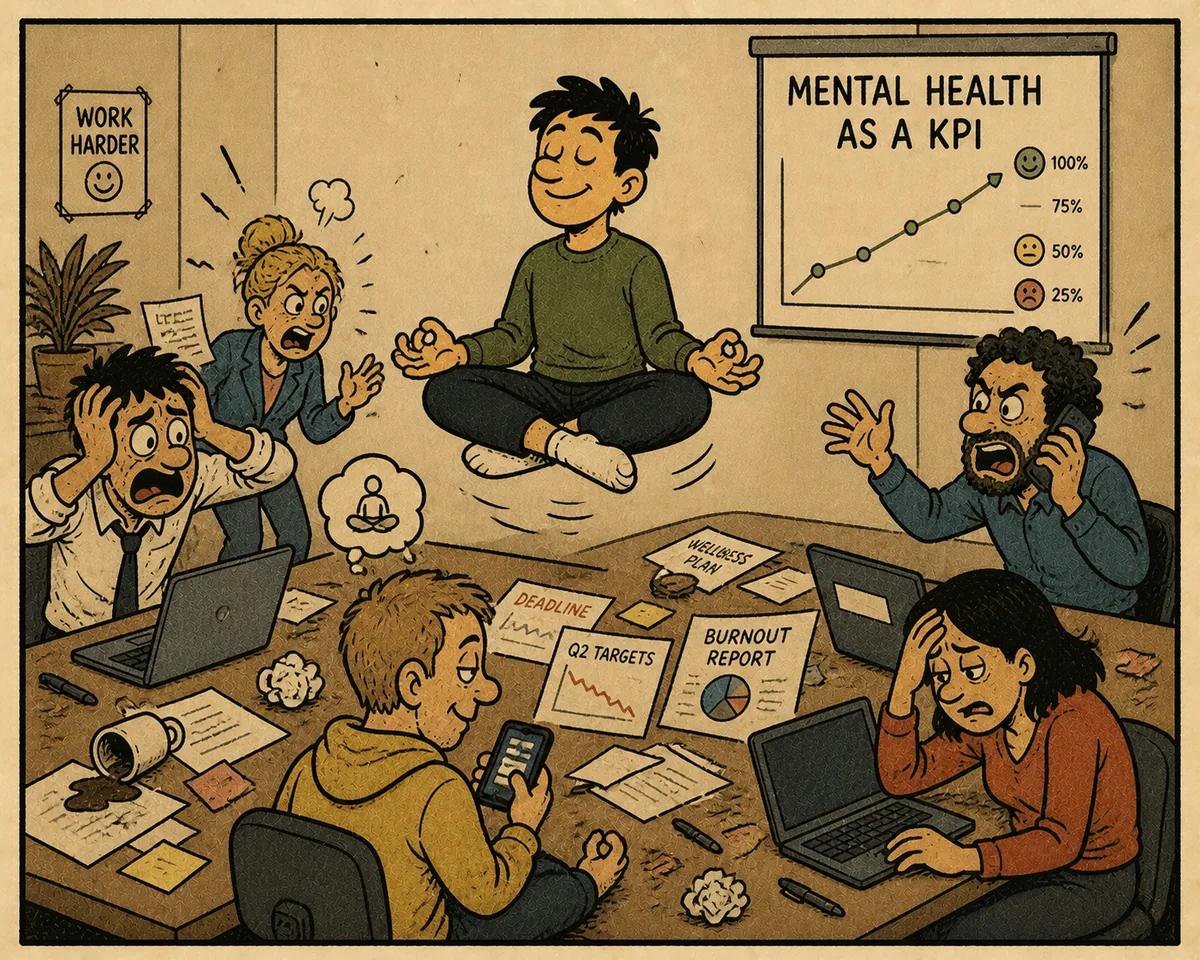
Imagine presenting a "founder calm" metric alongside traditional startup KPIs like monthly recurring revenue and user acquisition. This metric would track sleep hours, logout times, and non-work Sundays. Sounds ridiculous? Maybe. But the numbers behind this idea are not.
The Numbers Nobody Talks About
The WHO reports depression and anxiety lead to 12 billion lost working days a year — approximately $1 trillion in lost global productivity. Around 72% of corporate transformations fail due to burnout rather than technical or strategic flaws. Employees face a 66% increased risk of burnout during organizational change. This results in roughly $7.3 million in lost productivity per 10,000 workers annually.
We measure everything else. Why not this?
Why Chaos Gets Priority Over Calm
Startups obsess over measurable metrics while treating mental health as peripheral. Sleep, focus, and emotional stability get dismissed as "soft stuff" — despite their direct impact on performance and retention. We measure revenue to the decimal. We treat the person generating it as optional maintenance.
Mental Health as Infrastructure
Rather than optional wellness perks, mental health should function as critical operational infrastructure. Trackable indicators already exist: absenteeism, turnover trends, anonymous pulse surveys, deadline adherence, and PTO utilization.
You wouldn't ship code without monitoring. Why ship a team without it?
The Serenity Initiative
We're building a mental health dashboard designed to make wellness metrics visible alongside performance data — helping leaders identify stress patterns and burnout risks proactively, before they show up as attrition or missed deadlines.
Calm as Competitive Advantage
Sustainable endurance outperforms chaotic acceleration in building lasting companies. The sprinters burn out. The calm ones finish.
The most underrated metric in any startup isn't conversion rate. It's whether your team still wants to be there in six months.