
Let's talk about basketball for a second. No, seriously. Stay with me.
While you're busy grinding through yet another "How to Scale Your Startup in 90 Days" LinkedIn post, I'm over here studying the playbook of a team that dominated European basketball for decades.
Jugoplastika Split.
Never heard of them? That's because they peaked before Instagram stories and highlight reels became a thing. But here's what they did: they won everything. European Cup, Yugoslav championships, you name it. They weren't just good — they were annoyingly good.
And then they weren't.
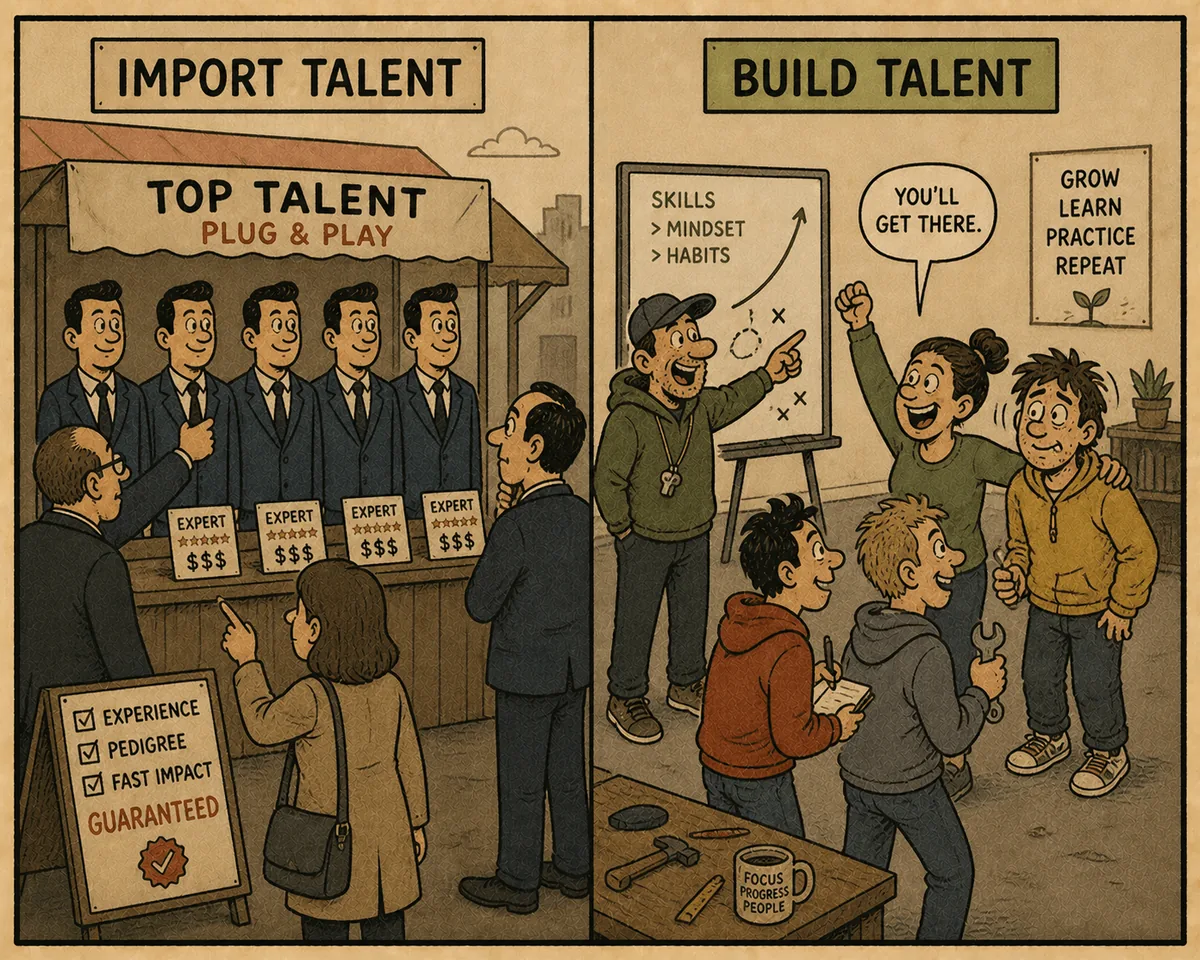
What happened? Same thing that happens to most startups when they get cocky: they started buying expensive talent instead of growing their own.
The University Department Plot Twist
So there we were at Serenity, doing our usual "how do we scale without going broke" dance, when someone mentioned the University Department of Professional Studies in Split, Croatia.
They have a mandatory internship program where students need to complete 200+ hours of real work experience to graduate. Sounds reasonable, right?
Most Croatian companies treat these internship requests like spam emails. They either ignore them completely or give the classic "we don't have time to babysit students" response.
The few that do accept? They usually park students in the corner to "observe" or give them mind-numbing data entry tasks that teach them nothing about the industry they're trying to enter.
Meanwhile, students are literally begging for opportunities to work for free just to tick a graduation requirement box.
The Jugoplastika Philosophy (Applied to Code)
Jugoplastika didn't win because they had the best players. They won because they created the best players.
They'd scout kids from local playgrounds. Kids who were rough around the edges, made mistakes, had zero polish. But they had hunger. They had potential. And most importantly — they were moldable.
The team invested time. They tolerated mistakes. They built systems around developing talent instead of just acquiring it.
And it paid off. Toni Kukoč became the 6th man for the Chicago Bulls. Dino Rađa dominated in the paint for the Boston Celtics. These weren't imported superstars — they were homegrown talent that Jugoplastika developed from scratch.
When other teams were throwing money at established stars, Jugoplastika was cultivating their own ecosystem. And it worked. Until they stopped doing it. The moment they started buying expensive veterans from other clubs? Game over. Literally. They became basketball history.
Our Version of "Scouting Playgrounds"
So we signed that contract with the University Department. Not because we suddenly became philanthropists. We did it because we realized something: every senior developer was once a junior developer who someone took a chance on.
Every CTO was once someone who didn't know the difference between Git and GitHub. Every "10x engineer" was once someone who pushed to production on a Friday afternoon and learned why you don't do that.
The difference? Someone invested in their potential instead of just complaining about their current skill level.
No Seniority, No Ego, Just Deploy
Our team philosophy, stolen directly from a basketball team that probably never heard of JavaScript:
Give opportunities to your own kids. Not because they're perfect. Because they're hungry.
Not because they know everything. Because they're willing to learn everything. Not because they have years of experience. Because they have years of curiosity ahead of them.
We're building around people who are willing to think outside the box — mostly because they don't know the box exists yet. We're letting them be creative. We're pushing their curiosity. We're tolerating their mistakes because we remember making the same ones.
The Anti-Ego Ecosystem
Most companies operate like those post-Jugoplastika basketball teams: throw money at established talent, expect immediate results, wonder why the chemistry sucks.
We're building a team where the 22-year-old intern can challenge an architecture decision without getting laughed out of the room. Where "junior" doesn't mean "coffee fetcher" — it means "future senior with fresh perspective."
TL;DR
- Jugoplastika dominated by developing talent, not buying it.
- Croatian students get 200+ hours of real work experience — most companies ignore this.
- We signed up because potential beats polish.
- Young talent brings hunger and fresh thinking.
- No seniority, no ego — just shipping code and learning.
- Sometimes the best "veterans" are the ones you grow yourself.
So yeah, we're basically running a basketball team that codes. And honestly? It's working better than our last three hiring strategies combined.
Who knew a Yugoslav sports team from the '80s would have better startup advice than most accelerators?